Health data de-identification

1 TB of patient data, de-identified in under 48 hours.

Our pipeline finds and removes patient identifiers across structured records and free-text clinical notes, while keeping the medical detail intact, so the data is still useful for AI training. Before anything ships, our AI red team tries to re-identify the patients and we fix whatever it finds.

Already have de-identified data? We audit it against HIPAA Safe Harbor or issue a signed Expert Determination certificate.

Book a free call

Free scoping call. No commitment.

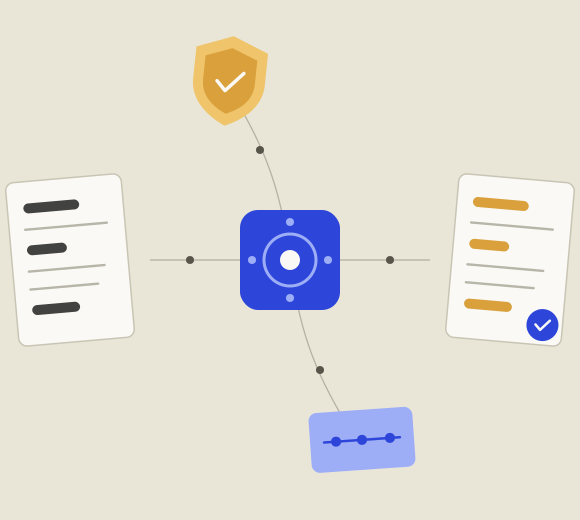
A patient record passing through the Shfa de-identification engine and coming out verified

01 — What you get

De-identification, certification, and audits. One engine behind all of them.

01

De-identification pipeline

We connect to your data where it lives: FHIR, EHR exports, Apple Health, JSON and more. A set of detection models finds all 18 HIPAA identifiers, including the ones buried in clinical notes. Each one is removed, replaced with a realistic stand-in, or generalized. Up to 1 TB in under 48 hours.

02

Expert Determination certificate

When you need to keep exact dates, ages or locations, we measure the re-identification risk of every record against Census population data and reduce it until it clears the threshold. You receive a signed certificate from Emiliano Mankolli, PhD, that satisfies HIPAA's Expert Determination standard.

03

Safe Harbor audit

Already de-identified your data in-house or with another vendor? We check it against all 18 HIPAA Safe Harbor identifiers, run our red team on it, and report exactly what we found. You get a clear pass or a list of what to fix.

02 — Made for AI

Remove the identity. Keep everything a model learns from.

Most de-identification tools black out anything that looks sensitive. The result is safe, but a model learns nothing from "[NAME] visited [HOSPITAL] on [DATE]."

We replace identifiers with realistic stand-ins instead, and use the same stand-in for the same patient across every record, so visits still link together. Dates are shifted rather than deleted, so the order and spacing of events survive. Ages, labs, medications, diagnoses, procedures and the clinician's own notes stay exactly as written.

You get a dataset an AI model can learn from and a compliance officer can sign off on, with the evidence attached. HIPAA, GDPR and CCPA/CPRA.

01Stays in — ages, labs, medications, diagnoses, procedures, timelines and the clinician's own notes.
02Comes out — names, addresses, dates of birth, record numbers and every other identifier, swapped for one consistent stand-in per patient.

03 — See it in action

De-identification across every data type.

Patient names, ages, facilities, dates, phone numbers, MRNs, and providers, identified and replaced while the clinical meaning stays intact.

Original text

De-identified text

Elena Vasquez is a 58-year-old patient admitted to Riverside Community Hospital on 08/22/2025 for chest pain. Contact: (602) 555-0142 MRN: RG-441982. Attending: Dr. Thomas Reed

Patricia Huang is a 61-year-old patient admitted to Valley Medical Center on 06/10/2025 for chest pain. Contact: (602) 555-8831 MRN: RG-773204. Attending: Dr. Naomi Keller

04 — Red team

Before you ship it, we try to break it.

Removing names is no longer enough. An AI agent can rebuild an identity from a job title, a town and a date. So before every release, our own AI agents play attacker: they take the de-identified records, combine the remaining clues with public records, and try to name a real patient.

If they succeed, we trace how, tighten the de-identification, and run the attack again until they fail.

The red-team models run inside the same secure environment as your data. No outside API, and nothing leaves.

05 — Humans in the loop

For the most sensitive data, a person checks the machine.

Automated checks catch what rules can describe. The most sensitive releases also get a human reviewer, who inspects a sample of records by hand before sign-off.

And an Expert Determination is signed by a person, not by software. His name is on the report, and he stands behind it.

01Manual review — a sample of every sensitive release inspected by hand before sign-off.
02Signed determination — certified by Emiliano Mankolli, PhD. A named person, accountable for the report.

06 — Expert Determination

A senior researcher signs every determination.

Our proprietary de-identification technology is developed and operated by a senior team of AI researchers with doctoral training in healthcare data, clinical NLP, and privacy-preserving machine learning.

Emiliano Mankolli
Emiliano Mankolli, PhDHead of AI Research Department

07 — How it works

Three steps. Patient data never leaves your environment.

  1. 1

    Connect

    We deploy inside your cloud or on-premise environment and connect to your sources. Patient data is never copied out.

  2. 2

    De-identify and verify

    Identifiers are detected and replaced, every record is checked against its original to confirm nothing slipped through, and the red team attacks a sample.

  3. 3

    Ship with evidence

    You receive the de-identified dataset, a report of what was changed and verified, and, if requested, a signed Expert Determination certificate. Under 24 hours for up to 1 TB.

08 — Downstream licensing

Your de-identified data is worth money. We know who is buying.

AI labs and data platforms pay for compliant, de-identified clinical data. Medical facilities have been paid $300,000 to $3,000,000 for theirs.

De-identify with us and we connect you to licensing opportunities with the biggest frontier labs in the world. You approve every deal. You set the terms.

Learn about data licensing

Ship data you can defend.

Book a call. Bring a sample if you like. You leave with a plan, a timeline and a price.

Book a free call

No commitment. You approve every step.